Small flats often get a bad reputation. People walk into one, see the sofa jammed up against the bed, and assume the owner gave up. But plenty of 400 sq ft studios feel better than big houses stuffed with too much furniture. The difference usually comes down to a handful of decisions, and most of them cost very little.
So here’s what actually helps, whether you’ve got a studio, a one-bedroom or a snug little house with one good window. Some of it you can do this weekend.
The real problem with small places
Storage, mostly. You run out of cupboard space by about month two. Then the bedroom quietly turns into an office, with a laptop on the duvet and a tangle of cables behind the headboard, and the dining table becomes the place where post, keys and half a fruit bowl end up living.
Nobody plans for this. Fixing it means doing a bit of thinking before you buy anything. What do you use every single day? What do you use twice a year? What’s just sitting there because you felt bad throwing it out? Ask that first. Acquire Estate suggests running through these questions before every purchase. It applies whether you’re sorting one room or a whole residential property, and it saves more money than any sale ever will.
Go lighter than you think.
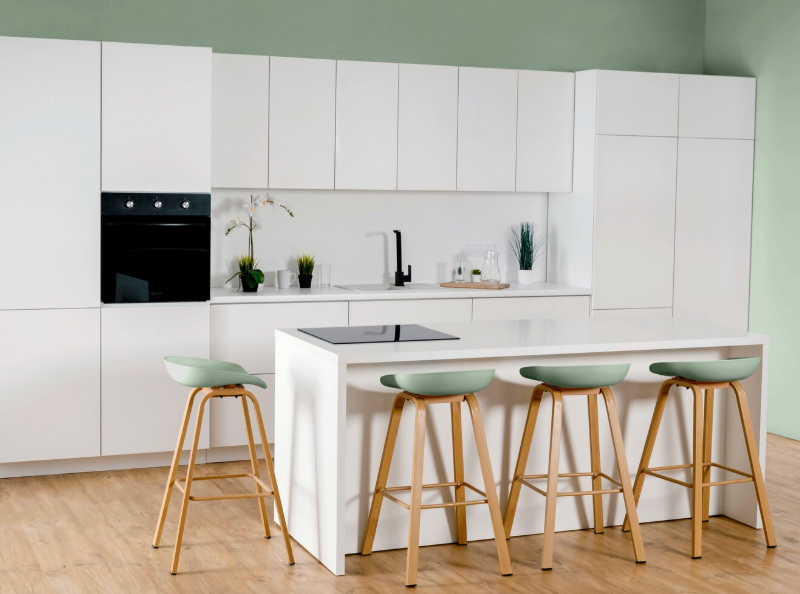
Paint is the cheapest upgrade going. Off-white, pale grey, sandy beige, anything that catches daylight and throws it back into the room. The dark navy on all four walls looks gorgeous in a big living room. In a 10 by 10 bedroom, it feels like sleeping inside a wardrobe.
Still want some colour? Pick one wall. Behind the bed works well, or the wall you see first when you walk in. Furniture follows the same rule, funnily enough. A chunky black wardrobe becomes the entire room. A pale oak one just sits there quietly and lets you get on with your day.
Furniture with a second job
If I had to spend money on one thing, it’d be this. A sofa bed for the guests who turn up twice a year. A coffee table that lifts open and swallows the blankets. A bed frame with drawers underneath, which is basically a free chest of drawers you didn’t have to find room for. A folding dining table that lives flat against the wall until Sunday lunch.
None of this is new. It’s common sense that finally became fashionable, and you’ll spot it in almost every piece of modern interior design published lately. One warning, though: check how the mechanism works before you buy. A sofa bed that takes ten minutes and a sore back to open will never get used.
Light. Let it in.
Thick curtains look cosy in photos and flatten the room in real life. Swap them for something sheer, or adjustable blinds if the neighbours can see straight in. Keep the space around windows clear too, so no wardrobe or tall shelf blocks half the glass.
Here’s a cheap one: put a mirror opposite the window. Light hits it, bounces back, and the room seems to double in size. A big one leaned against the wall works just as well if you don’t fancy drilling.
Look up
When the floor is full, walls are all you’ve got left. Floating shelves, a row of hooks by the door, a cabinet above the desk. Tall bookcases help in a sneaky way as well, because your eyes travel upward and the ceiling feels higher than it really is. That’s why residential interior design keeps leaning so hard on vertical storage.
Just don’t overdo it. A wall covered edge to edge in shelves gets heavy fast. Leave some blank space.
Smaller furniture, thinner legs
A huge L-shaped sofa in a tiny living room is a mistake people only notice after delivery. Go for slim legs so you can see the floor underneath, which makes everything look lighter. Round tables are worth considering too. No corners to catch your hip at 2 a.m. when you go looking for water.
Measure first, always. Then tape the outline of the piece on your floor and live with it for a day. If you keep tripping over it, don’t buy it. Sounds fussy, takes five minutes, and beats arguing with a delivery company about returns.
Rugs as invisible walls
A studio has no walls to divide it, so use rugs instead. One under the table means dining. One in front of the sofa means lounging. Stick to plain colours or quiet patterns, because a big loud geometric print will shout at you all day in a small room.
The boring one: declutter
Yes, again. It’s just true. A pile of stuff in a 12-foot room looks like a mountain, and the same pile in a big house barely registers. Every few months, go through your drawers and shelves. Anything you haven’t touched in a year, donate or sell.
Odd side effect: once it’s tidy, you finally notice the furniture and paint you chose. Before that, it was all noise.
A little personality
Don’t strip the place so bare that it feels like a waiting room. Cushions, one piece of art you love, a couple of plants (they freshen the air a bit, too). One big statement piece beats twenty small trinkets every time.
Interior design trends 2026
A few things are worth knowing about. Among the interior design trends 2026 has brought, natural wood and stone, curvy soft-edged furniture, and warm earthy colours like terracotta and clay show up the most. Sustainable materials keep growing, since more people want pieces that last ten years instead of falling apart in two. Hidden storage is everywhere as well, like beds that lift and benches with lids, which suits small homes nicely.
Not just for homes
The same rules work in a café or a tiny office. Any commercial interior design job with limited floor area ends up borrowing these ideas: keep it bright, keep the layout simple, and pick furniture that works hard.
Wrapping up
A small home doesn’t have to be stressful. Light colours, smart storage, fewer things. That covers most of it. Do those and even a compact flat starts to feel roomy, and a bit more like yours.