Many people assume luxurious interiors are created by expensive furniture, designer lighting, or oversized spaces. While those elements can help, they are rarely the real reason a room feels elevated. The difference between an average room and a refined one often comes down to something simpler: the walls.
Walls are the largest uninterrupted surfaces in most homes, yet they are frequently treated as an afterthought. Homeowners spend months choosing sofas, tables, and fabrics, then rush the final stage with generic décor or leave walls empty altogether. The result is a room with good ingredients but no identity.
The truth is that luxurious interiors are not built by adding more furniture. They are built by creating visual confidence. Thoughtfully chosen wall art does this faster than almost any other design element.
A well-selected artwork gives a room focus. It tells the eye where to rest. It creates proportion, mood, and personality. Without that anchor, even premium furniture can feel like it is floating in an unfinished space.
This is why designers often begin with the walls rather than end with them.
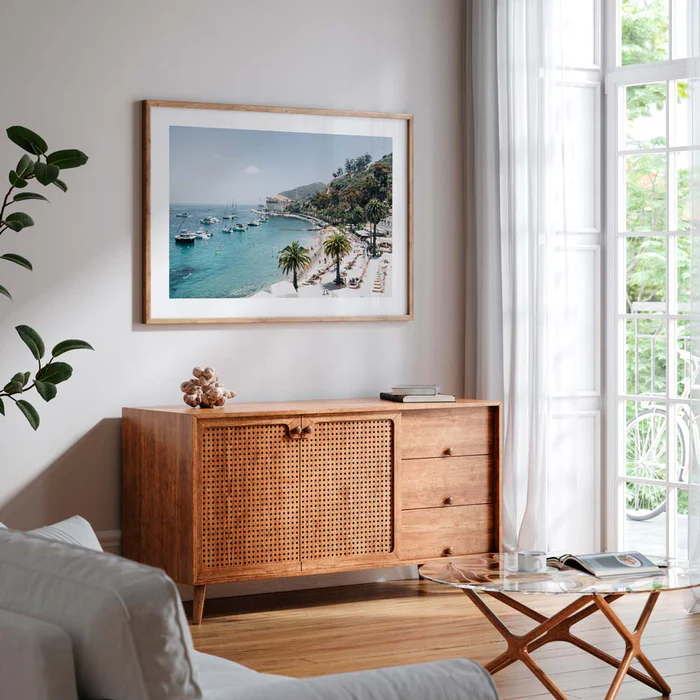
Consider a spacious living room with beautiful seating but no focal point. It may feel expensive, yet strangely cold. Add one large, elegant print above the sofa and the entire room becomes coherent. Suddenly the furniture feels intentional. The textures connect. The room feels complete.
That is the hidden power of art.
Luxury also depends on restraint. Many homeowners over-accessorize when trying to make a room feel richer. Extra stools, more side tables, more ornaments, more cushions. But true sophistication usually comes from fewer, stronger decisions.
One premium artwork can do more than ten small decorative objects.
This is where framed art becomes especially effective. Framing introduces structure, craftsmanship, and permanence. It signals that the piece matters. Whether modern photography, abstract composition, or landscape imagery, a framed piece feels curated rather than temporary.
For refined contemporary interiors, coastal photography can be remarkably luxurious because it combines calm with scale. A piece like Amalfi Art Print brings architecture, coastline, and Mediterranean elegance into the room. The layered cliffs and sea views feel worldly and elevated, making it ideal for dining rooms, entryways, or sophisticated lounges.
If your style leans lighter and more relaxed, Descanso Beach Club Art Print offers a different form of luxury. Palm-lined water views and sunlit coastal atmosphere create effortless elegance. It feels aspirational without being loud.
That matters because modern luxury has changed. Today, luxury is less about obvious wealth and more about emotional quality. Calmness is luxury. Space is luxury. Natural light is luxury. A room that helps you breathe easier often feels more premium than one filled with expensive clutter.
This is why wall choices matter so much.
Art also influences proportion. Rooms with high ceilings need vertical confidence. Long walls need scale. Compact rooms need imagery that opens space rather than closes it. The right piece can visually correct awkward architecture better than another furniture purchase ever could.
There is also longevity to consider. Trend furniture often dates quickly. Quality art remains relevant. It can move with you, work across different interiors, and gain emotional value over time.
That makes premium home decor choices on the wall smarter investments than many decorative purchases people regret later.
If your room feels incomplete, before buying another chair or side lamp, look at the walls. Ask what story the room tells. Ask whether it feels grounded. Ask whether it reflects the atmosphere you want to live in.
Often the answer is not more objects—it is stronger art.
Luxury is not measured by how much fills a room. It is measured by how intentionally the room feels designed. Better walls create that feeling immediately.
And that is why the secret to luxurious interiors is often not more furniture at all.