
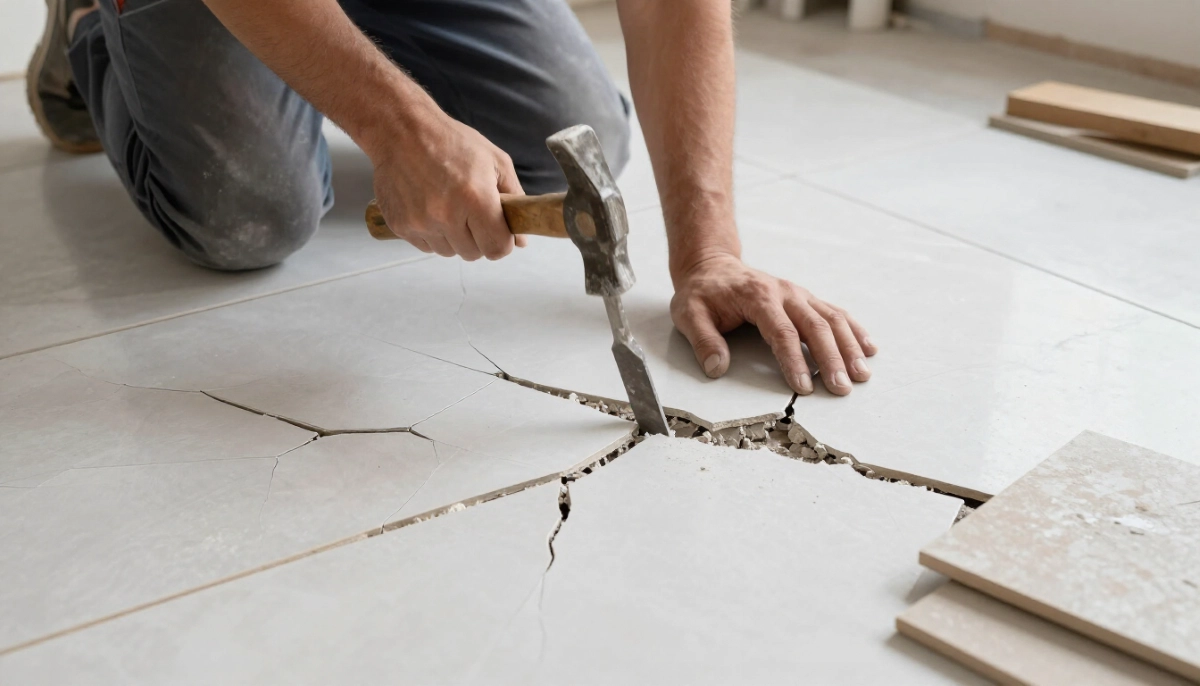
A cracked tile can remain unchanged for years, or it can be the first visible sign of movement below the finished surface. Tile crack monitoring helps separate stable cosmetic damage from patterns that deserve closer investigation. The key is to track location, width, direction, moisture, and whether nearby tiles or grout begin changing too.
Record the Crack Instead of Relying on Memory
Take a clear photo with a fixed reference point and note the date. Future pictures taken from the same angle make subtle changes easier to spot.
A simple maintenance record stored with other property maintenance reading can keep the observation from being forgotten. Avoid marking directly across finished tile with anything that could permanently stain the surface.
Notice What the Crack Crosses
A crack limited to one tile may come from impact, installation stress, or a localized weakness. A line continuing through several tiles or grout joints can suggest movement affecting a larger area.
Pattern matters more than appearance alone.
Check the Surrounding Grout and Tile Edges
Inspect nearby grout for new separations, crumbling, or repeated cracking. Tap gently only if doing so will not worsen loose material, and compare the area with neighboring tiles.
Tile is part of a larger finish system, so broader interior maintenance reading may help organize project notes while you track what changes. Still, visual monitoring should focus on the exact crack and surrounding joints rather than general appearance.
| Observed Change | What It May Suggest | Next Step |
|---|---|---|
| Crack stays unchanged | Stable damage | Continue monitoring |
| Crack grows longer | Ongoing movement | Inspect surrounding area |
| Several tiles crack | Wider substrate issue | Consider professional review |
| Moisture appears | Water-related problem | Find source promptly |
Pay Extra Attention to Moisture and Repeated Movement
Cracks near showers, tubs, exterior doors, sinks, or other wet areas deserve careful observation because water may enter damaged joints. A crack itself does not prove a leak, but staining, softness, persistent dampness, or loose material changes the situation.
Keeping photos among decorating bookmarks and renovation records can create a useful before-and-after history when finishes are eventually replaced.
Watch for Changes Beyond the Tile
Door misalignment, new wall cracks, uneven flooring, or repeated grout separation near the same area may indicate movement extending beyond one damaged tile. Those patterns are more informative than one isolated surface crack.
What People Often Misread About Tile Cracks
Not every crack means the foundation is failing, and not every hairline line should be dismissed as harmless. Tile can crack from impact, installation stress, substrate movement, temperature changes, or problems in the layers below.
Another mistake is filling the visible line immediately and forgetting it. A cosmetic patch can hide whether the crack is progressing. Record the condition first, then decide whether repair, replacement, or further investigation makes sense.
Frequently Asked Questions
How long should I monitor a tile crack?
There is no universal period. Take dated photos and compare them over time. Faster changes, repeated cracking, moisture, or movement in nearby finishes deserve attention sooner.
Can cracked grout be less serious than cracked tile?
Sometimes. Grout may crack because of minor movement at joints, but recurring grout failure can still indicate a problem with movement or installation underneath.
Should I replace one cracked tile immediately?
Replacement is reasonable for sharp, loose, or badly damaged tile. If the cause is uncertain, documenting the crack first may help determine whether a new tile would simply crack again.
Follow the Pattern, Not the Fear
A single cracked tile is a clue, not a diagnosis of the whole floor or wall. Photograph it, note surrounding changes, and watch for moisture, repeated cracking, or movement across several finishes. If the pattern expands or the area becomes loose or damp, investigate the underlying assembly before focusing only on cosmetic replacement.